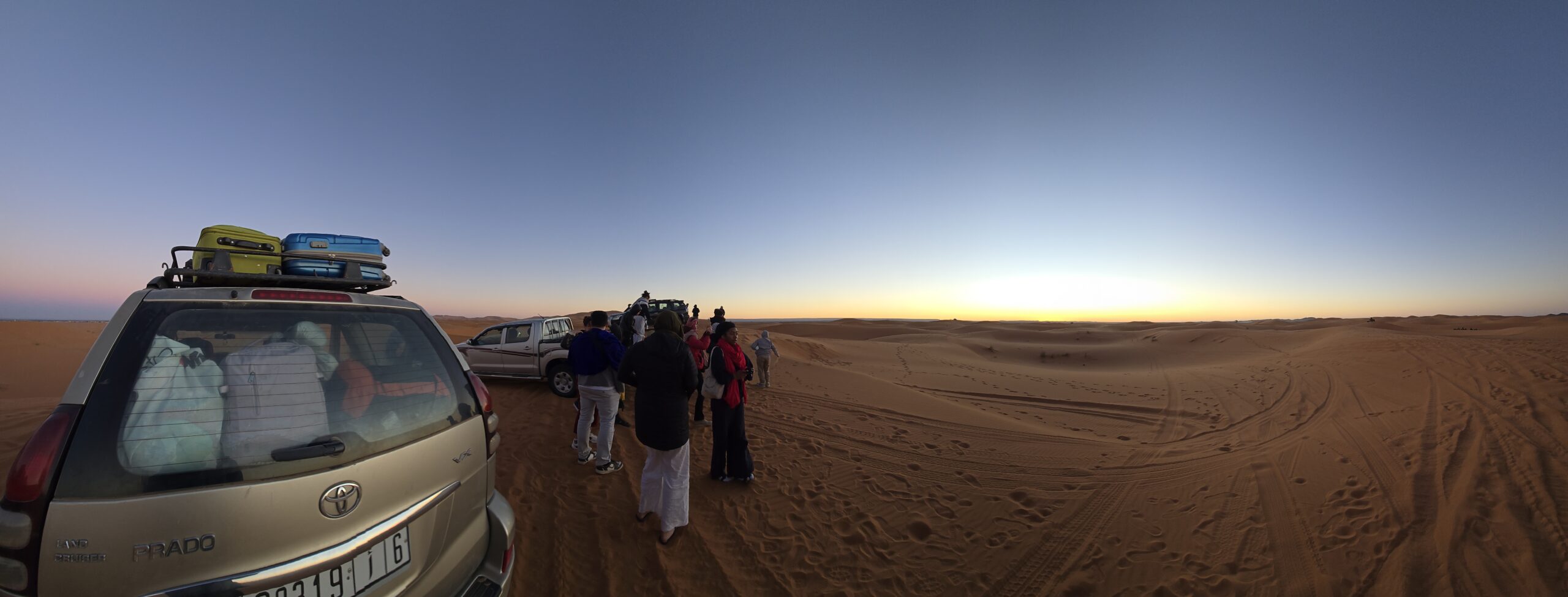
There is no bad month for the Moroccan Sahara, but there are months that will change how you travel. The desert has a wide temperature range rather than a uniformly hot climate, and almost no rain: Merzouga’s long-term averages run from a January low of about 3.5 °C to a July high of about 41 °C, with roughly 53 mm of precipitation across the whole year.
Here is what that actually means for a desert trip from Marrakech, month by month.
The short answer
October, November, March and April are the best months. Comfortable days, cool but manageable nights, clear skies. December to February is excellent for daytime sightseeing but genuinely cold after dark. June to August is workable if you accept an early-morning and late-afternoon rhythm and stay hydrated.
Average temperatures at Merzouga
| Month | Average high | Average low |
|---|---|---|
| January | 17 °C | 3.5 °C |
| February | 19 °C | 6 °C |
| March | 24 °C | 10 °C |
| April | 28.5 °C | 14 °C |
| May | 32.5 °C | 18 °C |
| June | 37.5 °C | 23 °C |
| July | 41.5 °C | 26.5 °C |
| August | 40 °C | 26 °C |
| September | 35 °C | 21.5 °C |
| October | 29 °C | 16 °C |
| November | 22 °C | 9 °C |
| December | 17 °C | 5 °C |
Long-term monthly averages for Mezouga / Merzouga. Individual days vary, and a dune crest at dawn always feels colder than the figure suggests because of wind.
Spring: March, April, May
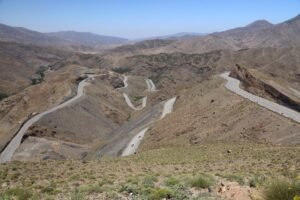
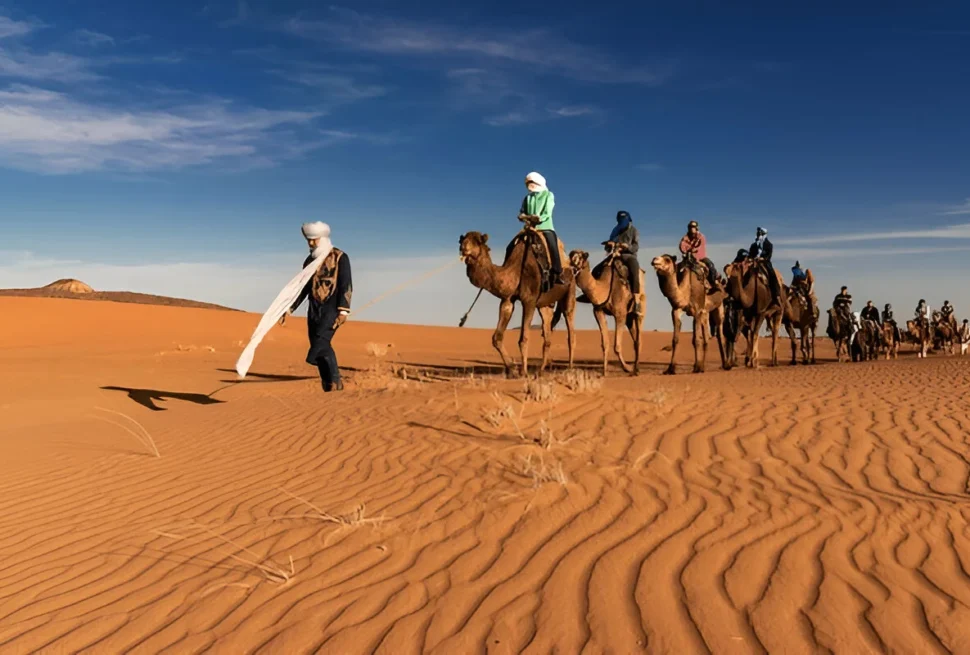
The strongest season overall. March and April give you days in the mid-20s and the Atlas passes still capped with snow — which matters, because the drive over Tizi n’Tichka is a large part of a 3-day Merzouga tour. Valleys are green, the Dades and Todra rivers are running, and a camel trek at 4 p.m. is pleasant rather than an endurance test.
May starts to heat up. It is still comfortable, but by late May the afternoon in the dunes is hot enough that most people prefer to rest until around 5 p.m.
One caveat: spring is when the chergui, a hot dry wind from the east, is most likely. It does not usually last more than a day or two, but it can make the air dusty and flatten the light for photographs.
Summer: June, July, August
These are the months travellers ask us about most nervously. The honest position: it is hot, and it is not dangerous if the itinerary respects the heat. Driving happens in the morning, the middle of the day is spent in shade or in an air-conditioned vehicle, and the camel trek moves to the last hour before sunset. Nights in the dunes stay around 25 °C, which is warm but means you can sleep outside the tent comfortably.
Summer is also the quietest season in the desert and the best time to see the stars without haze. If you are travelling in July or August, our Sahara packing list has the heat-specific items worth carrying.
If summer heat is the main concern, consider swapping the deep desert for the coast or the mountains — a day trip to Essaouira or a 3 Valleys Atlas tour both stay 10–15 degrees cooler.
Autumn: September, October, November
September is still hot but falling fast. October is arguably the single best month in the Sahara: high around 29 °C, low around 16 °C, stable weather, and the palm groves around Skoura and Rissani at their best. November is cooler and the light is excellent; bring a jacket for the evening.
October and early November are also the busiest weeks in the desert camps. If you want a specific camp, book earlier than you would for July.
Winter: December, January, February
Winter is underrated for the daytime and misjudged for the nights. Afternoons around 17–19 °C are ideal for walking the gorges and the kasbahs. But a January night in the dunes with an average low of 3.5 °C and open desert wind is cold — camps provide heavy blankets, and you should bring a warm jacket, hat and socks regardless.
Upside: the clearest skies of the year, empty dunes, and snow on the High Atlas on the drive out. Christmas and New Year are the exception on pricing and availability across Morocco.
So which month should you choose?
If you can travel any time, pick October or April. If your dates are fixed, the month rarely decides whether the trip works — it decides what you pack and what time of day you move. Where the month does change the recommendation is the destination: in high summer, a shorter trip to Agafay at sunset can be a better use of a hot week than two days in a vehicle.
Still weighing up which desert to visit? Read Merzouga vs Zagora vs Erg Chegaga, browse our Morocco tours, or tell us your dates and we will say plainly what the conditions are likely to be.