

This Zagora desert tour from Marrakech reaches the desert in two days rather than three. Zagora sits about 350 kilometres south. That is roughly six hours of driving, not nine and a half.
You stop at Ait Ben Haddou on the way. Then you ride a camel into the sand at sunset. Afterwards you sleep in a desert camp. Finally you watch the sunrise and drive back.
Your journey begins early in the morning as you depart from Marrakech, heading toward the dramatic Atlas Mountains. Along the way, you’ll be mesmerized by the changing landscapes, from the lush valleys to the arid, rugged terrain. Enjoy scenic stops at traditional Berber villages and the famous Ait Ben Haddou Kasbah, a UNESCO World Heritage Site and the backdrop of many Hollywood films.
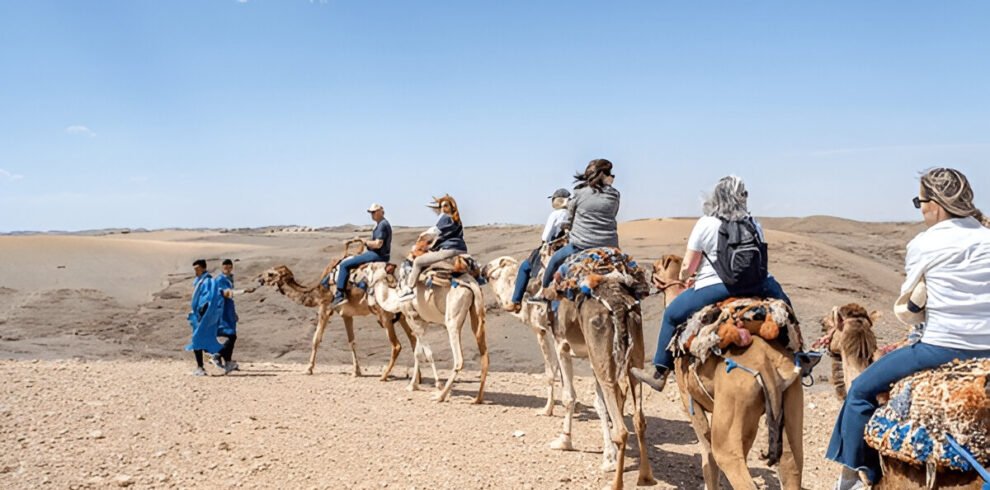
After a delicious lunch, continue on to Zagora, where the towering dunes of the Sahara await. In the late afternoon, you’ll mount your camel for a magical ride into the desert. Watch the sunset paint the sand in hues of orange and gold, before settling into a traditional desert camp for an authentic evening under the stars. Enjoy a Moroccan dinner, followed by music and storytelling around the campfire.
Zagora or Merzouga? The honest answer
This is the question that matters most before you book, so here it is plainly. Zagora is about 350 kilometres from Marrakech, roughly six hours. Merzouga is 530 to 560 kilometres, around nine and a half. That difference is why Zagora can be done in two days and Merzouga cannot.
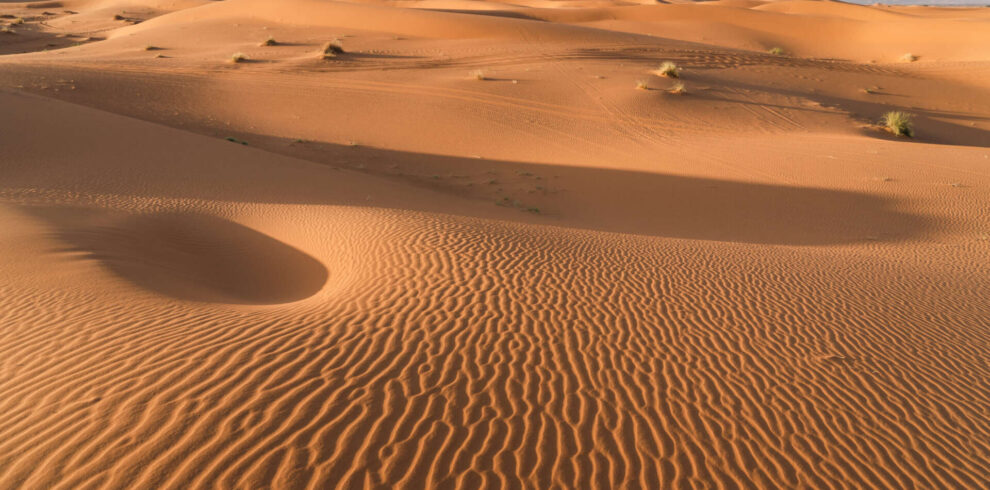
What you give up is dune height. The sand at Zagora is a smaller, flatter desert on the edge of the Draa Valley, not the towering erg you have seen in photographs — those pictures are almost always Erg Chebbi at Merzouga or Erg Chegaga. What you gain is a real night in a desert camp, a camel ride, the Draa palm oasis and Ait Ben Haddou, with one night away from Marrakech instead of two or three.
If the dunes themselves are the reason you are coming to Morocco, take the 3-day Merzouga tour or the 4-day version with two desert nights instead, and we will tell you so if you ask. If you have two days and want the desert experience rather than the postcard, this is the right trip. Our Merzouga vs Zagora vs Erg Chegaga comparison lays out the trade-off in full.
What the Zagora desert tour from Marrakech contains
Day one is the drive: over the Tizi n’Tichka pass at around 2,260 metres, down to Ait Ben Haddou — the UNESCO-listed fortified village on the old caravan route to Timbuktu — then Ouarzazate and south into the Draa Valley, one of the longest palm oases in Morocco. You reach the sand in the late afternoon and ride by camel to camp for sunset, dinner and the night.
Day two starts with sunrise over the dunes, which is the best half hour of the trip, then the long drive back to Marrakech with stops. Expect to be back in the city in the evening.
Before you book
Our guide to the Zagora desert tour covers the route in more detail. The Sahara packing list matters here too — desert nights are cold even when the days are hot — and what a night in a desert camp is actually like is worth reading if you have never slept in one. For timing, see our month-by-month guide to the best time to visit the Moroccan Sahara.
2-day adventure from Marrakech is an unforgettable experince to the enchanting Zagora Desert, a hidden gem of Morocco. This desert tour is designed for travelers seeking to immerse themselves in the stunning landscapes, rich culture, and serene atmosphere of the southern Moroccan dunes.
Overview
Two days from Marrakech to the Zagora desert: over the Tizi n’Tichka pass, a stop at Ait Ben Haddou, south through the Draa palm valley, then a camel ride and a night in a desert camp.
Highlights
- Scenic drive through the Atlas Mountains and Berber villages
- Visit to the UNESCO-listed Ait Ben Haddou Kasbah
- Camel ride through the Sahara Desert
- Overnight stay in a desert camp with traditional Berber hospitality
- Sunrise and sunset views over the Zagora dunes
- Only about six hours from Marrakech — the desert in two days instead of three
- The Draa Valley, one of the longest palm oases in Morocco