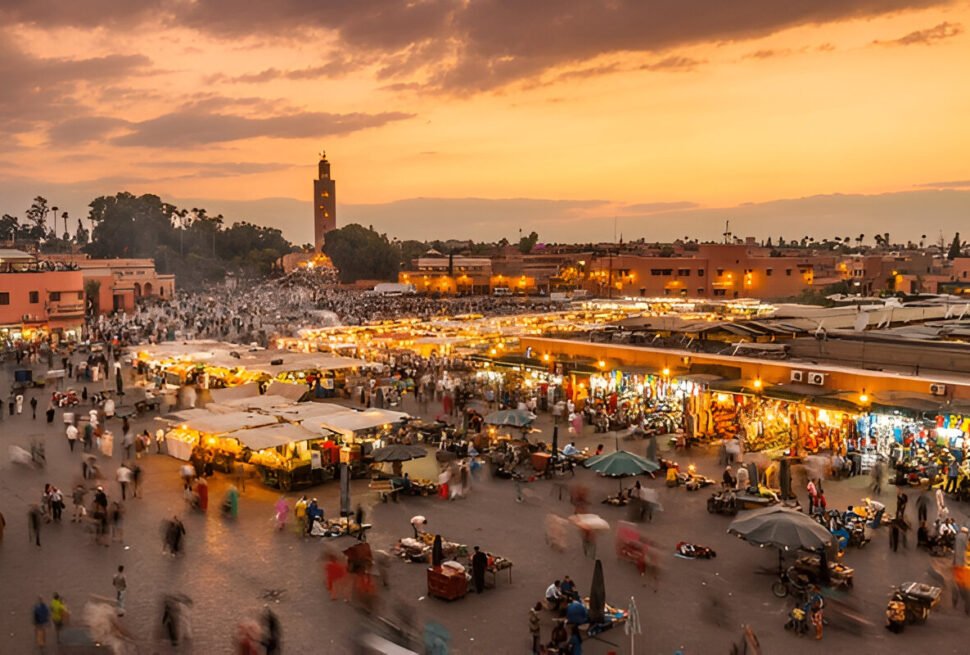
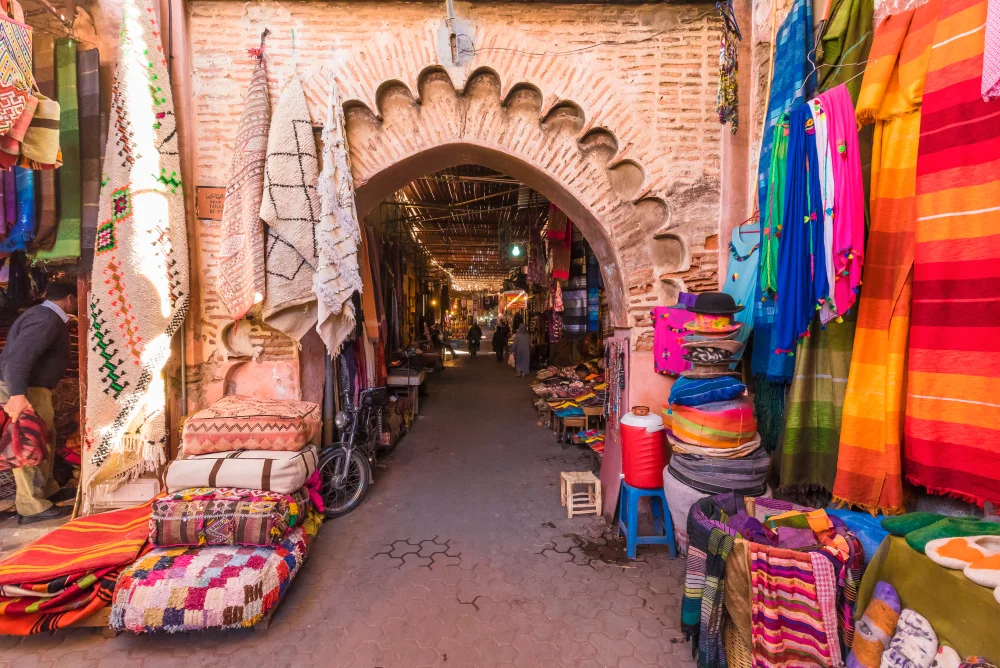
Morocco has no dress code in law for visitors, and nobody will stop you wearing what you like. In practice, covering your shoulders and your knees in medinas, souks and villages will make your trip noticeably easier and friendlier. Cities, riads, beaches and tourist restaurants are relaxed; the desert and the mountains are about temperature rather than modesty.
The one rule that actually matters
Dress for where you are standing, not for the country as a whole. Marrakech is several places at once: a riad rooftop, a crowded souk, a modern boulevard in Gueliz and a village an hour away all have different expectations, and you will pass through all four in a week.
Moroccans themselves dress across the whole range, from djellabas to jeans. What reads as out of place is not a bare arm — it is clothing that would look like beachwear anywhere outside a beach. Shorts that stop mid-thigh, strappy vests and visible swimwear in a residential quarter are the things that draw comment.
What to wear as a woman
You do not need to cover your hair. Headscarves are not expected of visitors anywhere in Morocco apart from inside a working mosque, and most mosques are closed to non-Muslims anyway.
What works well, in roughly descending order of usefulness:
- Loose trousers or a long skirt. Linen, cotton or anything that moves. Cooler than bare legs in real heat, which surprises people every time.
- Tops that cover the shoulder. A t-shirt is entirely fine. Sleeveless is fine in Gueliz, on the coast and in any hotel; it attracts attention in the old medina.
- A large light scarf. The single most useful item you can pack. Shoulders in a souk, head in the sun, neck on a cold desert evening, shoulders again in a mosque courtyard.
- Knee-length or longer. Knee-length is the practical threshold rather than ankle-length.
Swimwear is normal at riad pools, hotel pools and on beaches including Essaouira. Cover up between the pool and your room.
Attention from men in the souks is a real thing and it is almost entirely verbal. Dressing more conservatively reduces it somewhat; it does not eliminate it, and it is not your fault when it happens. We wrote about what is exaggerated and what is not in is Marrakech safe for tourists.
What to wear as a man
Long trousers almost everywhere. Moroccan men wear shorts at the beach and rarely anywhere else, so shorts in the medina mark you out as a tourist more than anything else you can wear.
T-shirts are fine. Vests and bare chests are not, outside a pool or a beach. In the heat, light long trousers and a loose cotton shirt beat shorts and a vest for comfort as well as for fitting in.
Mosques and religious sites
Most mosques in Morocco are closed to non-Muslims, so the question rarely arises. The significant exception is the Hassan II Mosque in Casablanca, which runs guided tours: cover shoulders and knees, and you will remove your shoes.
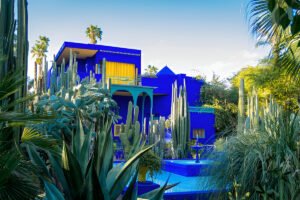
Medersas, museums, gardens and palaces — the Bahia Palace, the Ben Youssef Medersa, the Majorelle garden — have no dress requirements at all. Our guide to the Marrakech medina covers which are worth your time.
By season
Summer, June to August. Marrakech regularly passes 40 °C. Loose, light, long and pale beats short and tight. A hat and sunglasses are not optional. Avoid synthetics.
Winter, December to February. This is the one people get wrong. Daytime in Marrakech is pleasant, often 18 to 20 °C, but evenings drop sharply and most riads are poorly heated. Bring a proper jacket and something warm for your legs.
Spring and autumn. The easiest months. A light layer for mornings and evenings, and nothing else to think about. Month-by-month detail is in the best time to visit Marrakech.
The desert is a separate wardrobe
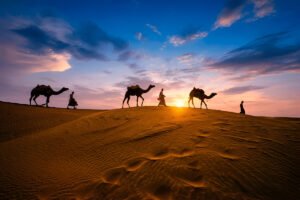
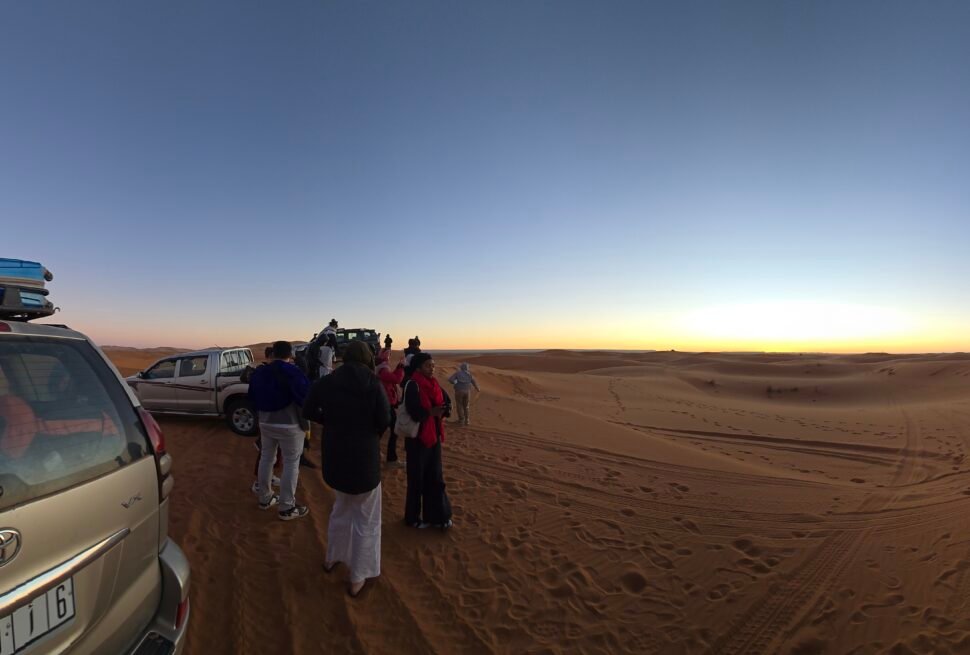
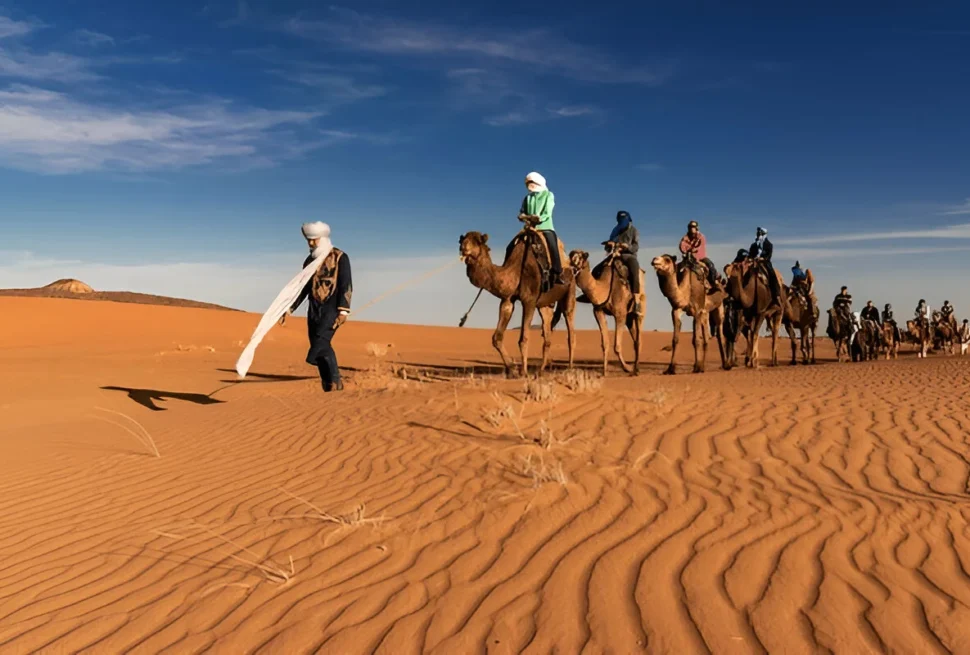
Nights in the Sahara are cold from November through March, and cool even in spring and autumn. The temperature swing between the afternoon dunes and three in the morning in a tent is larger than anything you have packed for at home.
Take layers you can add after sunset: a fleece or jumper, long trousers, socks, and a hat. Sand gets into everything, so closed shoes for the drive and sandals you do not care about for the dunes. The full tested list is in what to pack for the Sahara desert in Morocco, and a camp night is described in a night in a Sahara desert camp.
In the Atlas mountains, add one more layer again. Imlil and the high valleys are cold whenever Marrakech is merely cool.
Shoes
This is where people suffer most. Medina streets are uneven, often wet near the food stalls, and you will walk much further than you planned. Closed, comfortable, already broken in. Leave the new sandals at home for the first two days.
If your trip includes Chefchaouen, the blue city is built on a hillside and the streets are steep as well as uneven — see our guide to visiting Chefchaouen.
Hammams, and what nobody tells you
In a public neighbourhood hammam, women wear underwear and men wear shorts or underwear; full nudity is not the custom. In a riad or spa hammam you will be given disposable underwear. Bring flip-flops and a change of clothes either way, because you will come out damp.
During Ramadan
Dress a little more conservatively than usual and avoid eating, drinking or smoking in the street during daylight. Nothing is forbidden to visitors and restaurants aimed at tourists stay open, but the city is fasting around you and visible consideration is noticed and appreciated.
What to leave at home
Heels of any kind. White trousers. Anything that only works ironed. A separate outfit for every evening — laundry is cheap and fast nearly everywhere.
Planning a trip that covers the city, the mountains and the desert in one week? That is three climates in seven days, and it is the main reason packing for Morocco is harder than it looks. Tell us your dates and we will tell you what the weather will actually be doing on your route.