Yes. Marrakech is broadly safe for tourists, and violent crime against visitors is rare. The risks you will actually meet are non-violent: persistent touting, unofficial guides, redirection scams in the souks, taxi overcharging and pickpocketing in crowds. Women travelling alone receive more unwanted attention than in most European cities. None of it is dangerous; all of it is tiring if you are unprepared.
We live and work here, so what follows is what we tell our own guests rather than a list copied from a government advisory page.
What the real risks are — and what they are not
The gap between how Marrakech feels on day one and how safe it actually is catches many visitors out. The medina is loud, crowded and spatially confusing, and the human attention is constant. That combination reads as threat to a nervous traveller. It is almost never threat; it is commerce.
The genuine concerns, in the order you are likely to encounter them: being deliberately misdirected, being charged several times the going rate, having a phone or wallet lifted in a dense crowd, and mopeds moving fast through lanes barely wide enough for them. The moped is the one that actually injures people. Walk to the side and look before you step across a lane.
The scams you will meet, and how each one works
“That way is closed”
The most common one by far. A friendly stranger tells you the street ahead is shut, the square is the other way, or the tannery is closing in ten minutes. The destination is a shop that pays commission, or a long walk ending in a demand for payment. The street is not closed. Say no thank you, keep walking, and trust your map.
Unofficial guides
Official guides in Morocco are licensed and carry identification. Anyone who attaches themselves to you in the street is not one. They will often be perfectly pleasant for twenty minutes and then name a price you did not agree to. If you want a guide, book one in advance — this is exactly what our private medina day tour exists for, and you will know the price before you start walking.
Jemaa el-Fna photographs
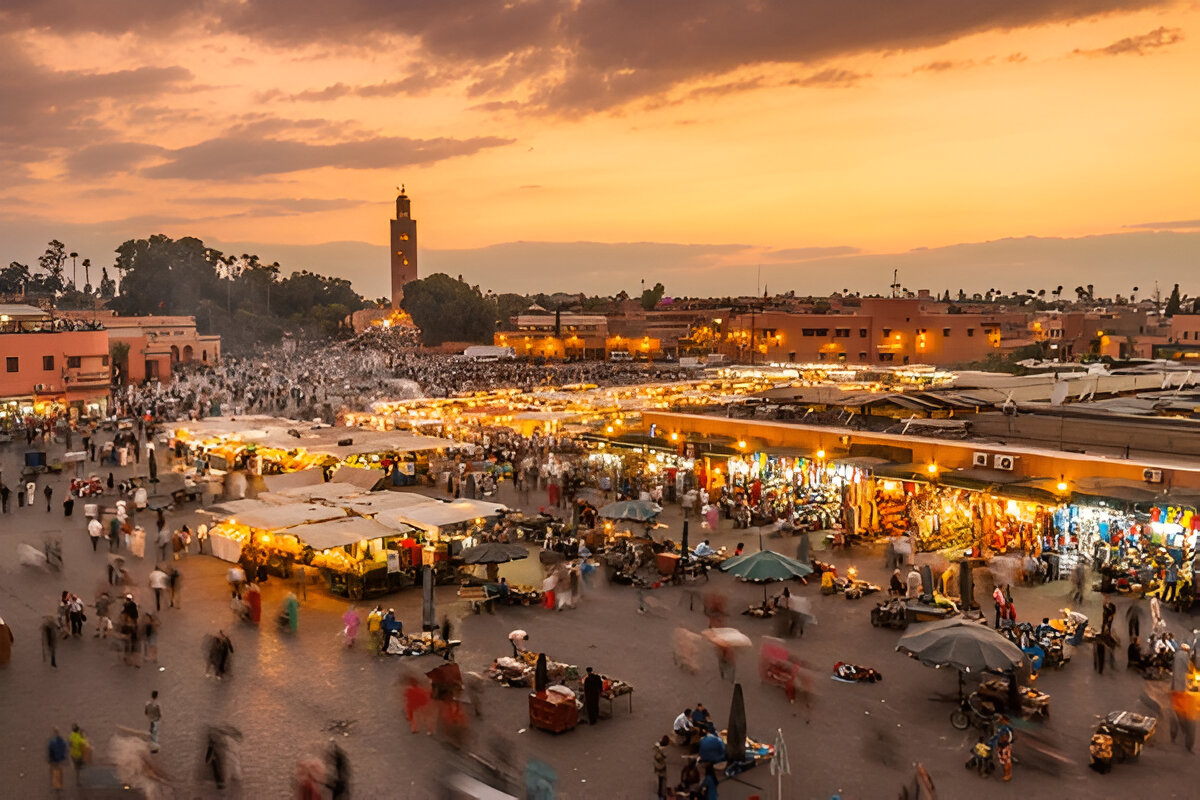
The snake charmers, the monkeys and the henna artists in the main square are working. If you photograph them, or if henna is applied to your hand before you have agreed anything, payment will be expected and the request will be firm. Decide before you raise the camera. If you do not want to participate, keep your hands to yourself and do not stop.
Taxis
Petits taxis are metered. Drivers will often prefer not to use the meter with tourists. Either ask for the meter before you get in, or agree the fare before you get in. Do not start the journey with the question unresolved, because the argument at the other end is unwinnable.
The gift that is not a gift
A bracelet slipped onto a wrist, a sprig of mint pressed into a hand, a small item for a child. Accepting it starts a transaction. Politely decline before it touches you.
Is Marrakech safe for women travellers?
Yes, and women travel here alone constantly. But we will not pretend the experience is identical to travelling as a couple or a group. Expect comments in the street, persistent attempts at conversation and occasional following for a short distance. It is wearing rather than dangerous, and it drops off sharply once you stop responding.
What actually helps: sunglasses, a destination you look confident about, and a flat refusal rather than a polite hesitation. Hesitation is read as negotiation. Dress is a smaller factor than most guides suggest — covered shoulders and knees attract less attention in the medina, but women in modest dress get approached too. The behaviour is about being a visitor, not about clothing.
In the new town, Guéliz, the atmosphere is noticeably more relaxed and closer to any southern European city.
Is Marrakech safe at night?
The main squares and the busy lanes are fine and lively well into the evening. The problem is not danger, it is navigation: the medina lanes empty out, lighting is poor and the landmarks you were using disappear. Getting lost at eleven at night in a deserted lane is unpleasant even when nothing happens.
Practical approach: take a taxi to the nearest recognisable gate or square rather than trying to be dropped at your riad, pin your riad on your phone before you go out, and ask the riad for a staff member to meet you if you are arriving late with luggage. Most riads will do this without being asked twice.
What about the 2023 earthquake?
The earthquake of 8 September 2023 did its worst damage in Al Haouz province, in the High Atlas south of the city, rather than in Marrakech. Parts of the old medina were damaged and some buildings were closed for repair. The city functions normally and has done for a long time. In the mountain valleys, official figures reported more than 54,000 homes completed across the affected provinces by March 2026, and the authorities said in 2025 that over 90 per cent of destroyed buildings in Al Haouz had been rebuilt, though progress has been uneven in the most isolated villages.
Mountain tourism is a significant part of what those valleys live on. Going is more useful than staying away.
Seven precautions that actually matter
- Agree every price before the service. Taxi, guide, henna, photograph, porter. Every dispute we hear about started with this step being skipped.
- Carry small notes. “No change” is a negotiating position.
- Keep your phone in a front pocket or a zipped bag in Jemaa el-Fna and the busy souk lanes.
- Download an offline map before you arrive. Signal in the medina is unreliable and the lanes are not well signed.
- Say no once, clearly, then stop talking. Continued politeness is read as interest.
- Drink bottled or filtered water and be sensible about where you eat, as anywhere.
- Book your guide and your transfers in advance. Almost everything on this page is avoided by arriving with the arrangement already made.
Is it safe to take a desert tour?
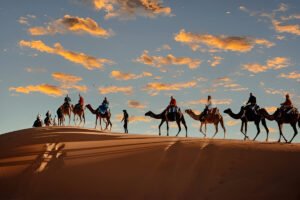
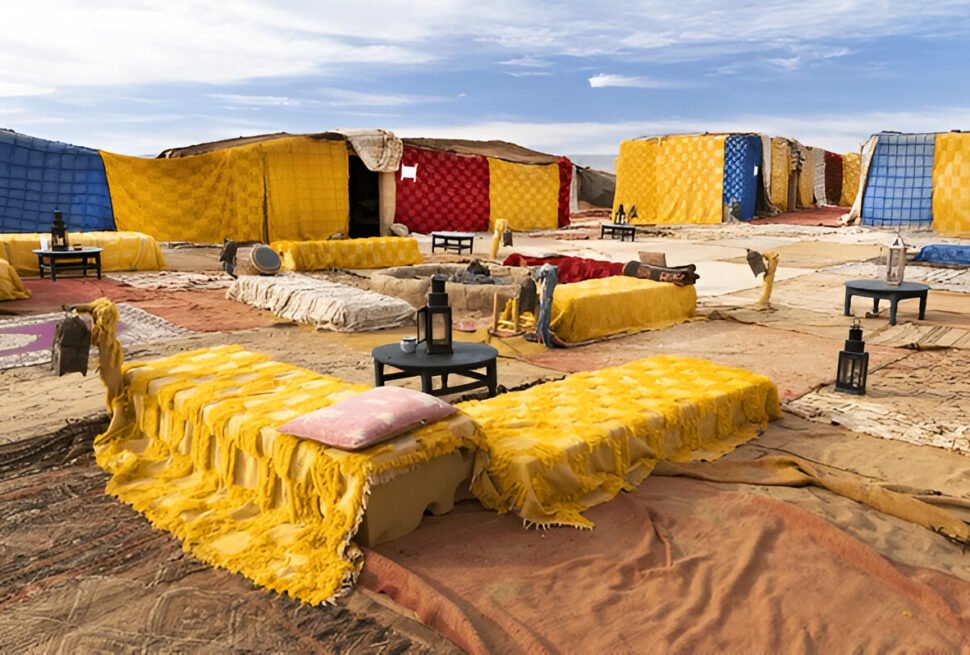
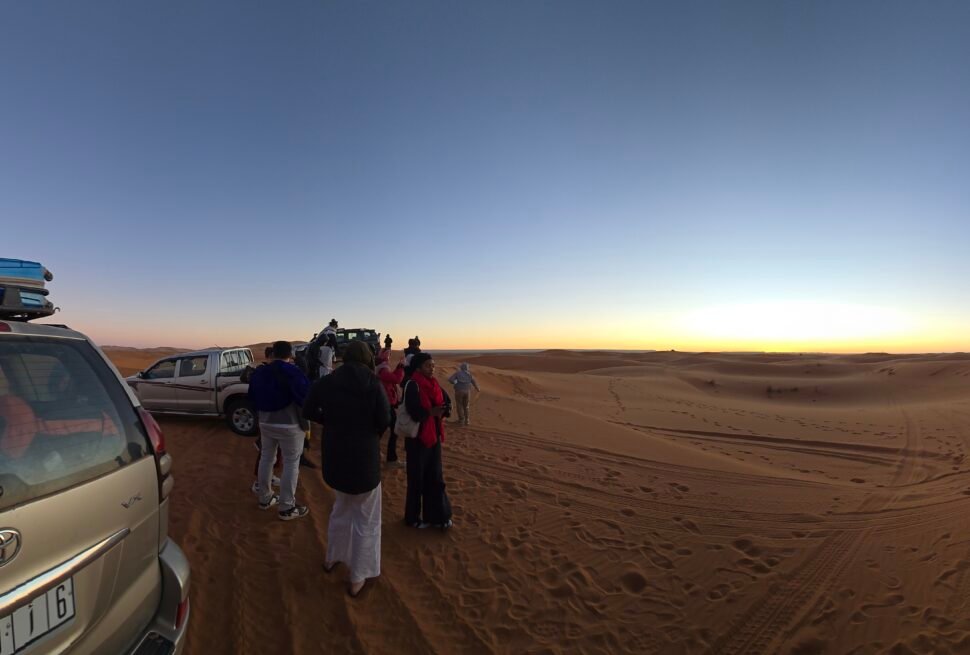
Yes, with the ordinary caveat that you are putting yourself in a vehicle on long mountain roads for several hours. Ask who the driver is, what the vehicle is, and whether the operator is a real company you can contact afterwards. The Tizi n’Tichka pass at around 2,260 m is a good road but it is a mountain road, and a driver who has done it four hundred times is worth more than a cheaper seat.
On our tours the driver is our own, the vehicle is air-conditioned, and nothing is reserved until we have confirmed it to you in writing, including which accommodation you are staying in. That confirmation is itself a safety feature: it means you know where you are going to sleep before you leave Marrakech.
Common questions
Is Marrakech safe for solo female travellers?
Yes, and many travel here alone. Expect more street attention than at home, respond with a clear no rather than politeness, and book a guide for your first day in the medina so you learn the geography with someone beside you.
Is it safe to walk around the medina alone?
During the day, yes. The medina is busy and full of people going about their lives. At night the lanes empty and navigation becomes the real problem, so use taxis to and from recognisable gates.
Do I need a guide in Marrakech?
Not strictly, but a guided first day pays for itself. The souks are organised by trade rather than by street, and knowing that turns a maze into a sequence. It also ends the approaches, because you are visibly already accompanied.
Is tap water safe in Marrakech?
Most visitors drink bottled or filtered water, and that is what we would suggest for a short trip.
What should I do if someone follows me?
Walk into a shop, a café or a hotel lobby rather than down a quieter lane. Staff deal with this constantly and will help without fuss.
Is Marrakech safe for families with children?
Yes. Moroccan street life is welcoming towards children, sometimes very demonstratively so. The practical hazards are mopeds in narrow lanes and the heat, not crime.
The honest summary
Marrakech is a safe city with an exhausting first afternoon. Visitors who have a bad time here almost always had the same experience: they arrived with no plan, accepted help from a stranger in the street, and spent the next two hours being steered. Visitors who arrange their first day in advance tend to describe the same city as one of their favourite places.
If it would help, our private medina day tour exists precisely to be that first day: a local guide, a price agreed in advance, and the geography of the old city explained once so that it makes sense for the rest of your stay. You can also read our guides to the Marrakech medina and the best places to visit in Marrakech before you come.