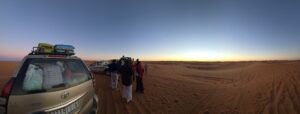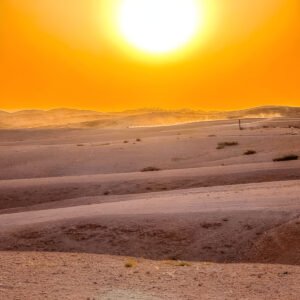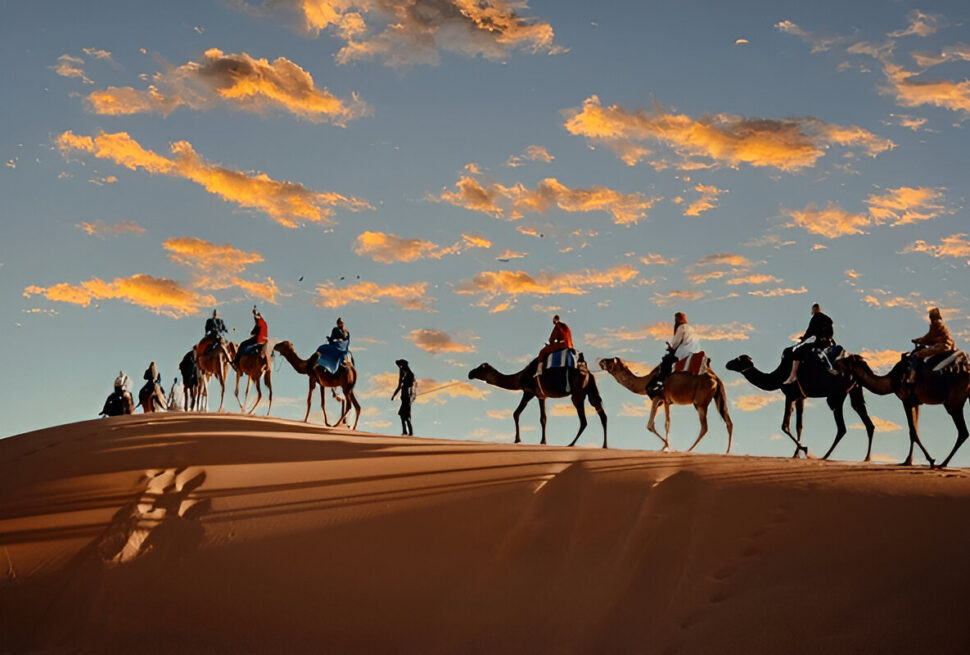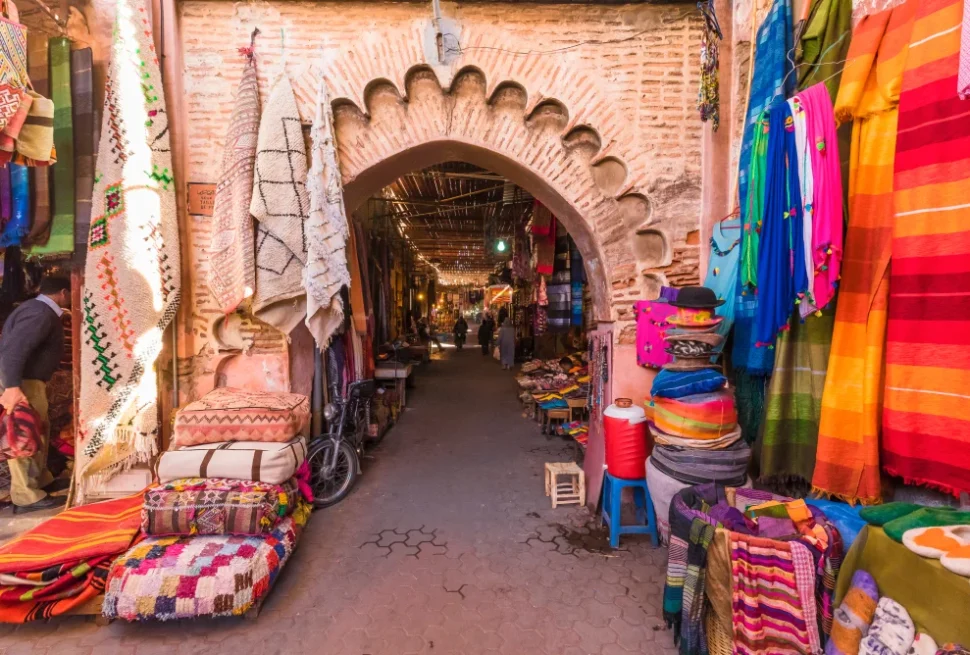
Most people pack for the Sahara as if it were simply a hot place. It is not. Merzouga’s own climate record shows an average July high of about 41 °C and an average January low of about 3.5 °C, with roughly 53 mm of rain across the entire year. The desert is a wide-range climate, not a hot one, and the gap between afternoon and 4 a.m. is what catches travellers out.
This is the list we give our own guests before a 3-day Merzouga desert tour. It assumes one or two nights in a desert camp, a camel ride into the dunes, and long hours in a vehicle.
The short version
If you only read one paragraph: bring a warm layer even in summer, closed shoes you do not mind filling with sand, a scarf long enough to wrap your head and face, sunglasses, high-factor sunscreen, a refillable water bottle, a power bank, and a small torch or head-lamp. Everything else is comfort.
Clothing, layer by layer
Loose and light beats tight and technical. Cotton and linen breathe; they also stop fabric sticking to you on a camel saddle.
- Base: two or three loose long-sleeved shirts. Long sleeves are cooler than bare arms in direct sun and save you sunscreen.
- Legs: lightweight trousers rather than shorts. Sand, stirrups and low scrub all argue for covered legs. Shorts are fine around camp.
- Warm layer: a fleece or light down jacket. Between November and March you will want it from sunset onwards; in April, May, September and October you will still want it at dawn.
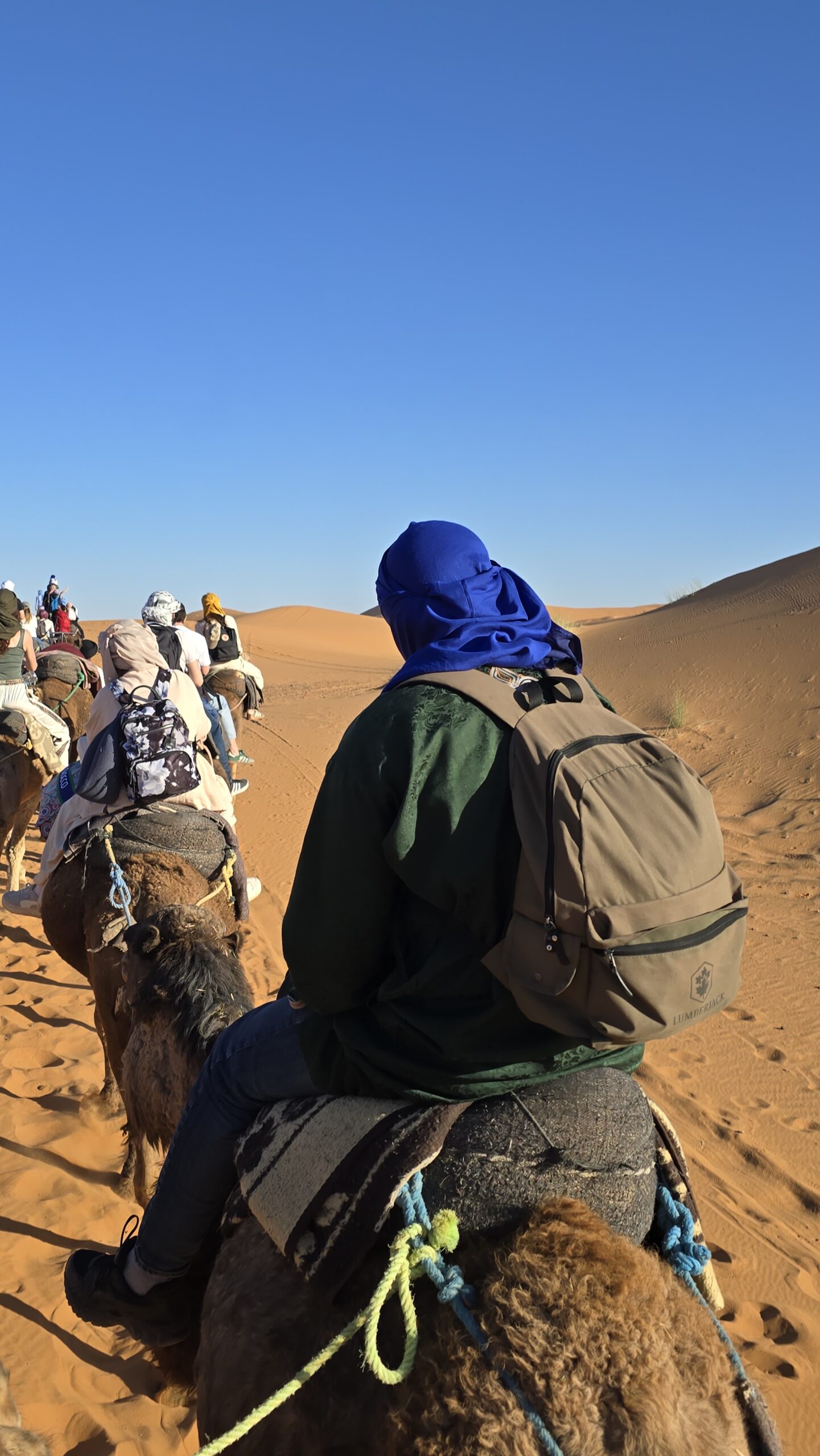
- Head: a wide-brim hat for the day, plus a long cotton scarf. A scarf doubles as sun protection, a dust filter on a windy afternoon, and a pillow in the 4×4.
- Modesty note: Morocco is relaxed with visitors, but you will pass through small villages and Berber family homes. Knees and shoulders covered avoids awkwardness and is genuinely more comfortable in the sun.
Footwear
Closed trainers or light walking shoes are the right answer for the drive, the kasbahs and the gorges. Bring a second pair of sandals or flip-flops for the camp itself — walking barefoot on dunes at sunset is one of the better parts of the trip, and you will want something easy to slip on when you come back to the tent. Ankle-height boots are unnecessary unless you are also trekking in the Atlas Mountains.
For the camel ride specifically
A camel trek is short but it is not passive. Pack a small day-bag you can wear on your back or across your body — not a bag you need to hold. Put your phone, water, scarf and sunglasses in it and leave the rest of your luggage in the vehicle or at camp. Trousers rather than a skirt or dress. And if you wear a hat, bring one with a chin cord: the wind on the crest of a dune is stronger than it looks.
Camp at night
Desert camps in Erg Chebbi and Erg Chegaga provide bedding and blankets. What they cannot provide is charge, light and warmth on your own schedule, so bring:
- a power bank — camp electricity is usually solar and limited to certain hours
- a head-lamp or phone torch for finding your tent after dark
- warm socks and a beanie for winter nights; thermal leggings if you feel the cold
- wet wipes and hand sanitiser
- lip balm and a moisturiser — dry air is the complaint we hear most often
- earplugs, if you are a light sleeper
Season adjustments
- June to August: the priority is heat management. Extra water, electrolyte sachets, a cooling scarf, and an acceptance that midday is for shade. You still need one warm layer for the early morning.
- December to February: daytime is pleasant, nights are genuinely cold. Add a proper jacket, gloves and a hat.
- March to May and September to November: the easiest months to pack for. One warm layer, one sun layer, done.
What you can leave at home
Hiking poles, a sleeping bag, a mosquito net, formal clothes, a hair dryer and heavy toiletries. Also leave behind the assumption that you need a signal: coverage in the dunes is patchy and the evening is better for it.
Before you book
If you are still deciding which desert to visit, our comparison of Merzouga, Zagora and Erg Chegaga sets out the honest differences in driving time and dune scale. You can also browse every departure on our Morocco tours page, or message us with the dates you have in mind and we will tell you what the weather is realistically doing that week.