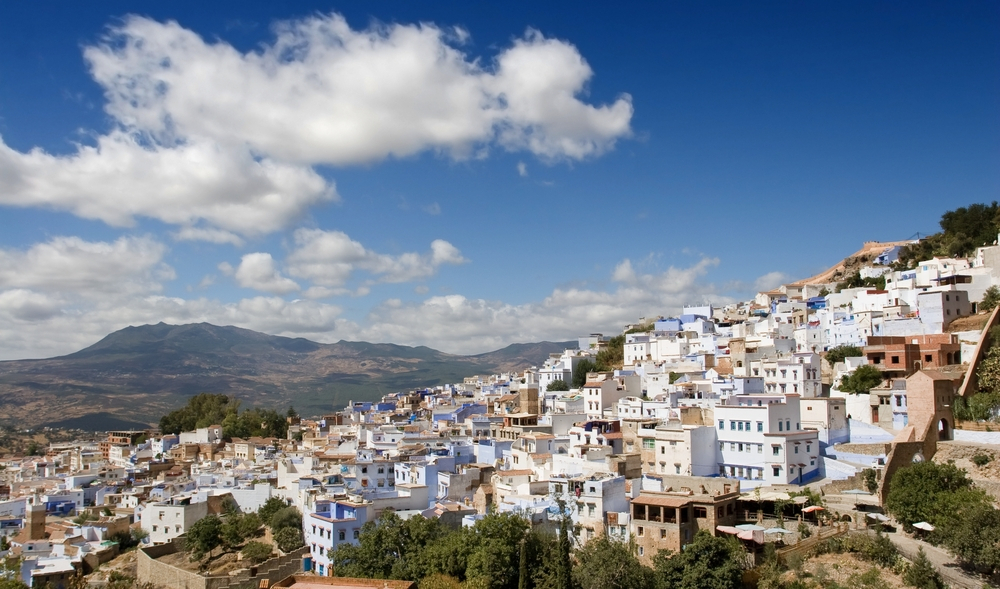
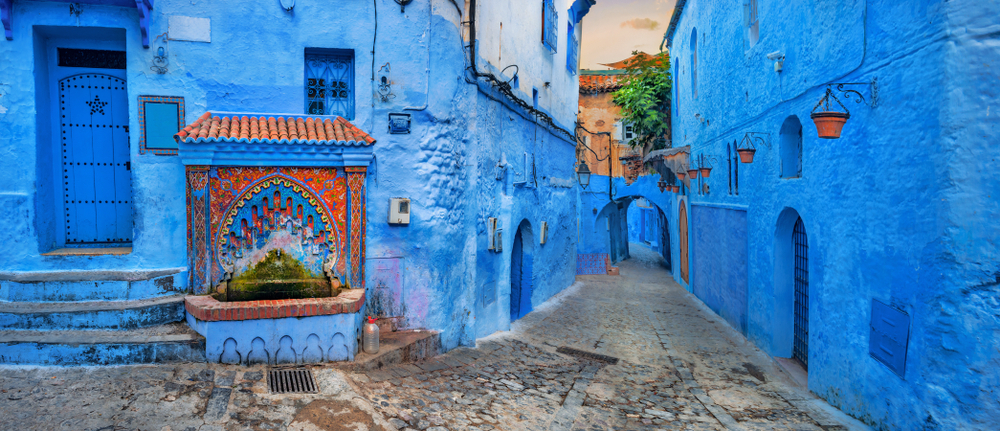
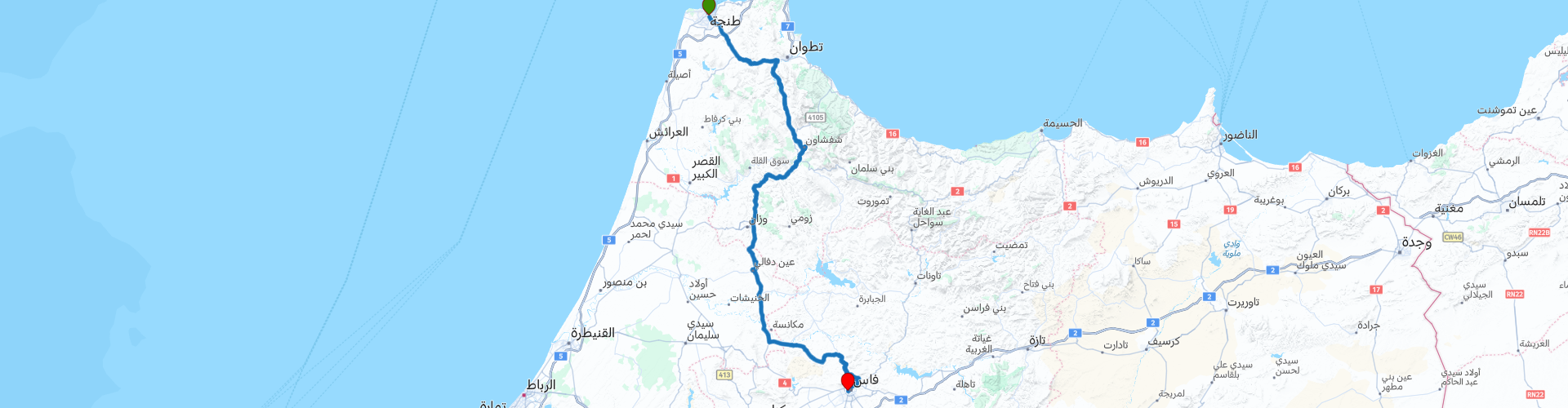
This is the northern route, and it is the one most people do not realise exists. Instead of going south to the dunes, you head up the Atlantic coast through Casablanca and Rabat, spend two nights in the blue mountain town of Chefchaouen, and come into Fes past the Roman ruins of Volubilis. Four of Morocco’s most photographed places in three days, and no desert driving at all.
Why go north instead of south
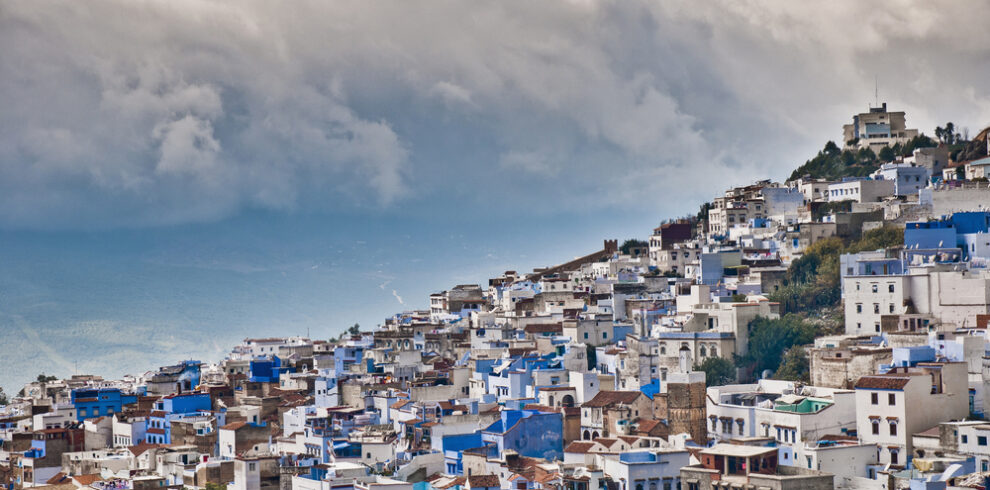
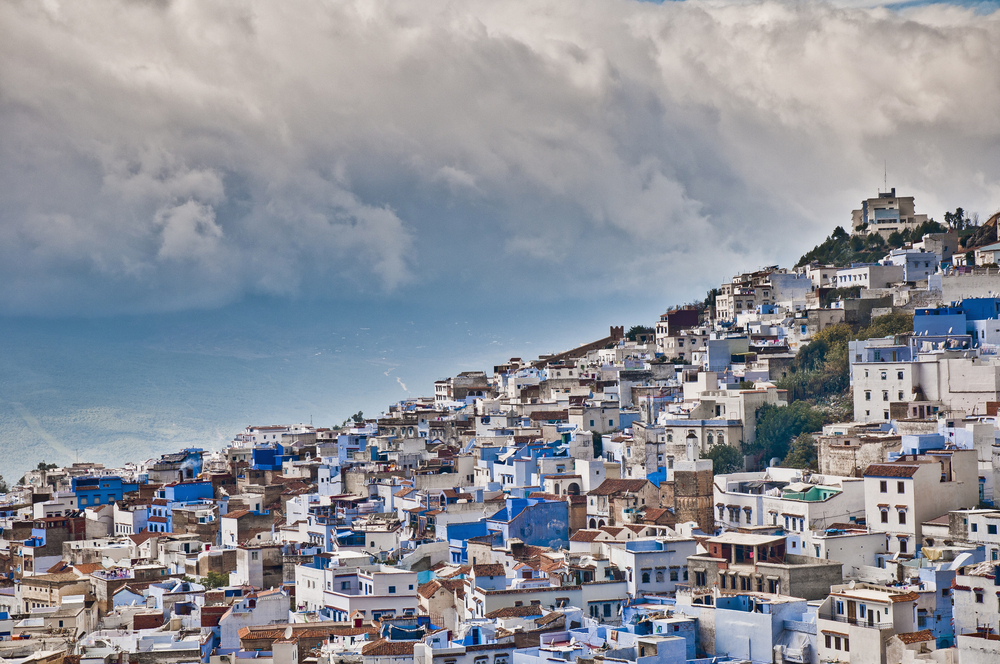
The Sahara is the headline, but the north is where the country’s history is stacked up. Rabat is a UNESCO World Heritage site — inscribed in 2012 as a “Modern Capital and Historic City” — and the Hassan Tower there is the unfinished minaret of a mosque begun in 1184. Volubilis was the Roman provincial capital and has been UNESCO-listed since 1997, with its mosaics still in the ground where they were laid. And Chefchaouen is not just blue for the camera; it is a working Rif mountain town, and two nights is what it takes to see it before and after the day-trippers arrive.
Day by day, briefly
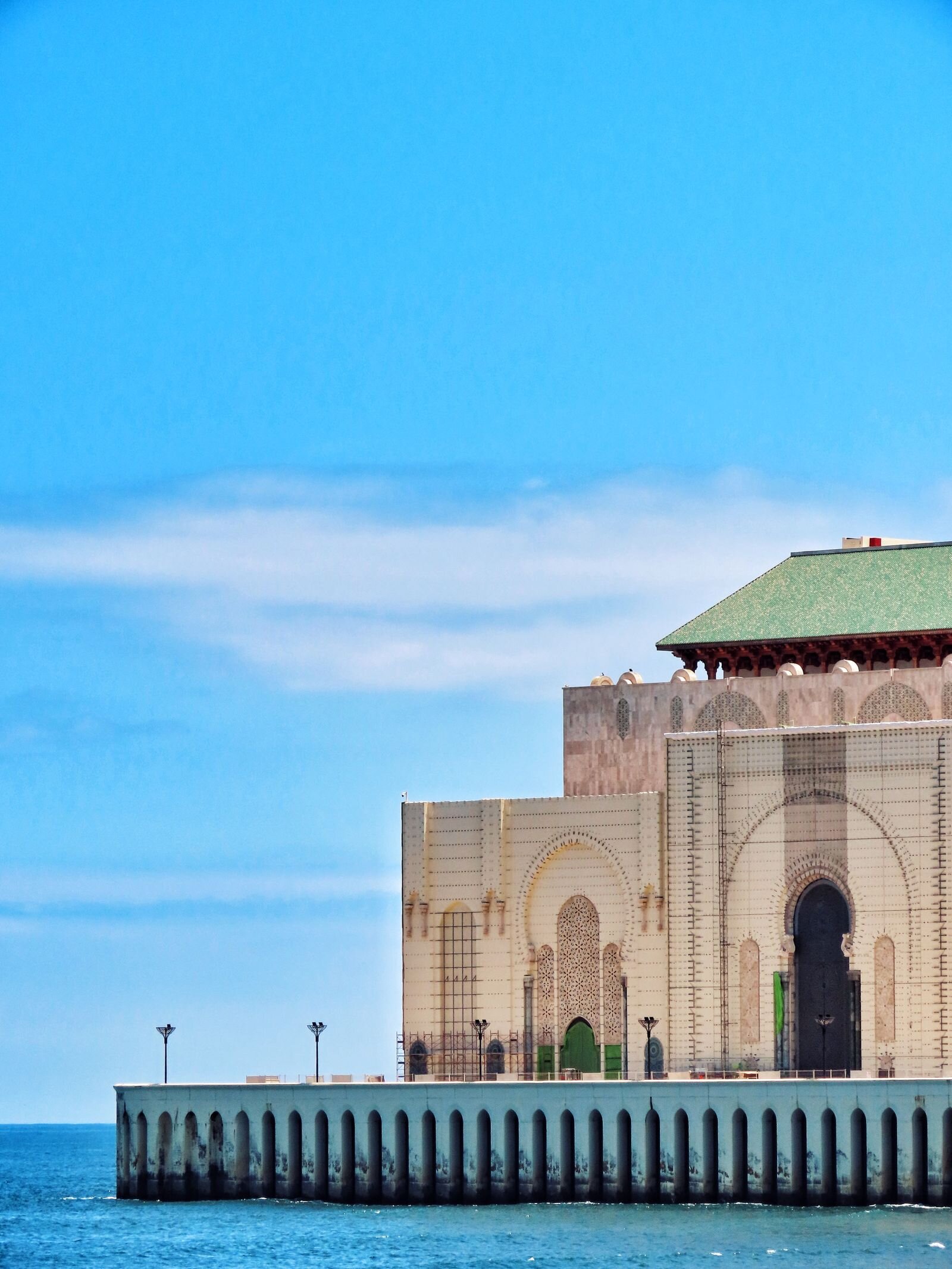
Day one is the drive north: Casablanca for the Hassan II Mosque, completed in 1993 with a 210-metre minaret standing over the Atlantic; Rabat for the Hassan Tower and the Kasbah of the Udayas above the river mouth; then on into the Rif to Chefchaouen for the night. Day two is Chefchaouen itself, unhurried — the blue lanes, the Spanish mosque on the hill above the town for sunset, the Ras el-Maa spring where the water comes out of the mountain. Day three brings you to Volubilis and the imperial city of Meknes, and into Fes by evening.
Who this suits
Anyone flying out of Fes or Tangier, anyone who has already seen the desert, and anyone travelling in high summer when the south is punishing and the Rif is not. It pairs naturally with a desert trip in the other direction: do this first, then our 3-day Sahara crossing from Fes to Marrakech, and you have seen most of the country in under a week.
Our Chefchaouen guide covers the town in detail, and the Fes medina guide is worth reading before you arrive.
Aperçu
This is the northern route, and it is the one most people do not realise exists. Instead of going south to the dunes, you head up the Atlantic coast through Casablanca and Rabat, spend two nights in the blue mountain town of Chefchaouen, and come into Fes past the Roman ruins of Volubilis. Four of Morocco’s most photographed places in three days, and no desert driving at all.
Why go north instead of south
The Sahara is the headline, but the north is where the country’s history is stacked up. Rabat is a UNESCO World Heritage site — inscribed in 2012 as a “Modern Capital and Historic City” — and the Hassan Tower there is the unfinished minaret of a mosque begun in 1184. Volubilis was the Roman provincial capital and has been UNESCO-listed since 1997, with its mosaics still in the ground where they were laid. And Chefchaouen is not just blue for the camera; it is a working Rif mountain town, and two nights is what it takes to see it before and after the day-trippers arrive.
Day by day, briefly
Day one is the drive north: Casablanca for the Hassan II Mosque, completed in 1993 with a 210-metre minaret standing over the Atlantic; Rabat for the Hassan Tower and the Kasbah of the Udayas above the river mouth; then on into the Rif to Chefchaouen for the night. Day two is Chefchaouen itself, unhurried — the blue lanes, the Spanish mosque on the hill above the town for sunset, the Ras el-Maa spring where the water comes out of the mountain. Day three brings you to Volubilis and the imperial city of Meknes, and into Fes by evening.
Who this suits
Anyone flying out of Fes or Tangier, anyone who has already seen the desert, and anyone travelling in high summer when the south is punishing and the Rif is not. It pairs naturally with a desert trip in the other direction: do this first, then our 3-day Sahara crossing from Fes to Marrakech, and you have seen most of the country in under a week.
Our Chefchaouen guide covers the town in detail, and the Fes medina guide is worth reading before you arrive.
Practical notes before you book
Day one is the long one — around eight hours of driving with the Casablanca and Rabat stops — and days two and three are gentle by comparison. The Hassan II Mosque interior is open to non-Muslim visitors on guided tours only, at set times, and that ticket is not included; tell us if seeing the inside matters and we will try to time the stop around a tour slot. Chefchaouen is at around 560 metres in the Rif and is noticeably cooler and wetter than the south, so bring a layer and expect rain between November and March.
Our Chefchaouen guide covers the town in detail and our Fes medina guide is worth reading before you arrive. If you want the desert as well, pair this with the 3-day Sahara crossing from Fes to Marrakech, which starts exactly where this one finishes — or see the 10-day grand tour, which combines both in one booking. Our guide to how many days you need in Morocco sets out every option.
Points forts
- Two nights in Chefchaouen, so you see the blue city early and late, not at midday
- The Hassan II Mosque in Casablanca, completed 1993, minaret 210 m above the Atlantic
- Rabat: the Hassan Tower, begun 1184, and the Kasbah of the Udayas
- Volubilis, the Roman provincial capital, UNESCO-listed since 1997
- Meknes, the imperial city, on the road into Fes
- No desert driving — a good choice in high summer
- Private vehicle and driver; ends in Fes for onward flights