Yes, but the choice of trip matters far more than the child’s age. The deciding factor is driving time, not the desert itself: Agafay is 45 minutes from Marrakech and works for almost any age, while Merzouga is nine and a half hours each way and is hard below about seven or eight. Private transport, rather than a shared minibus, is what makes the difference.
The driving is the whole problem
Children do not struggle with sand, camels or sleeping in a tent. They struggle with sitting still. Every decision about a Morocco desert trip with kids comes back to how many hours a day they will spend in a vehicle.
Here is what that looks like in practice:
| Trip | Longest single driving day | Realistic from age |
|---|---|---|
| Agafay, afternoon or evening | about 45 minutes each way | Any age |
| Ourika Valley or Ouzoud, day trip | 1 to 2½ hours each way | About 4 |
| Zagora, 2 days | about 7 hours | About 6, with breaks |
| Merzouga, 3 days | about 8 hours on day one | About 7 or 8 |
| Merzouga, 4 days | same distance, spread wider | About 6, and much easier |
Note the last row. The circuit de 4 jours dans le désert de Merzouga covers the same ground as the three-day version with an extra night in it, which turns the worst driving day into two manageable ones. For families it is almost always the better choice, and it is the change we suggest most often.
If your children are under six
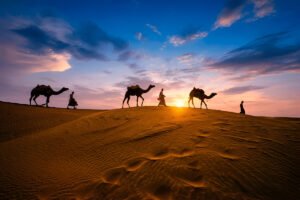
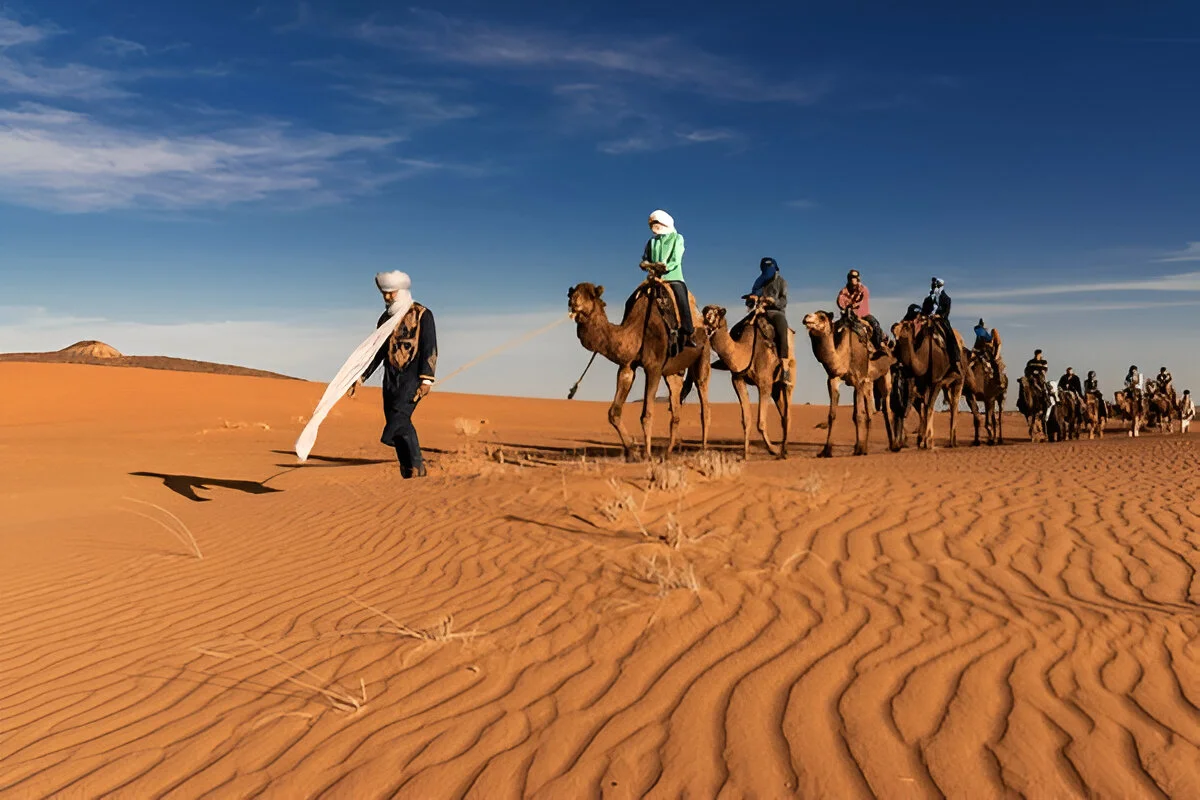
Stay close to Marrakech. The Agafay desert evening with a camel ride and dinner gives small children the whole experience — the camel, the open desert, dinner under the sky, drumming — and has them back in a familiar bed the same night. It is the single best family booking in the Marrakech area and it is not close.
Le Ourika Valley day trip also works well: a river to paddle in, short walks, and an hour’s drive. Ouzoud has wild monkeys, which is unbeatable with children, but it is two and a half hours each way.
Take a private tour, not a shared one
This is the one piece of advice we would push hardest. On a shared departure the schedule belongs to fourteen other people: you stop when the group stops, you leave when the group leaves, and a child who needs ten minutes gets ten minutes of fifteen adults waiting.
On a private trip you stop when you need to, you can cut a stop short, and you can leave an hour later because breakfast went badly. The cost difference is real, but for a family of four it narrows considerably, because private pricing is usually per vehicle rather than per seat. We set out the full comparison in shared versus private desert tours in Morocco.
Camels, and who should actually ride
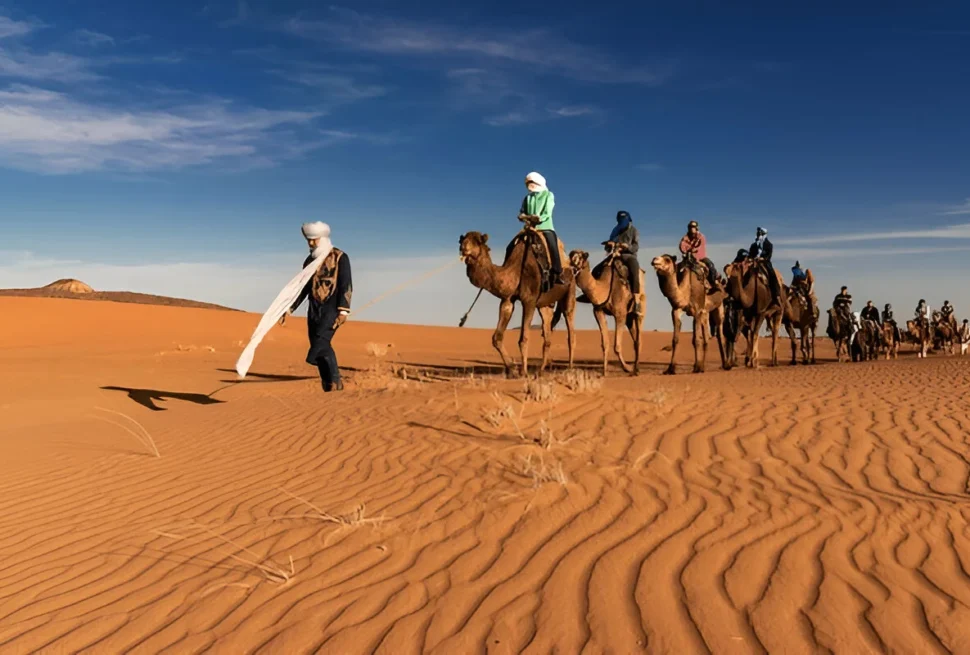
Camels get up and down in a lurch that surprises adults, let alone a six-year-old. A child who is confident on a pony will be fine; a nervous child will not enjoy the first thirty seconds and may not recover from it.
Two things help. Ride with your child rather than beside them where the operator allows it, and treat the camel as optional — at Merzouga you can reach the camp by 4×4 instead, which nobody minds and which is often the better call for a tired family at the end of a long day.
What the desert camps are like
Standard camps have shared bathrooms and no electricity after a certain hour. Luxury camps have private bathrooms, proper beds and lighting that lasts the night. With children, pay the difference. Being able to take a child to a bathroom at two in the morning without a torch and a walk is worth more than it sounds.
Nights in the Sahara are cold from November to March — genuinely cold, not merely fresh. Blankets are provided, but pack as if for a cold evening at home. We wrote a tested list in what to pack for the Sahara desert, and it applies double to children.
There is no wifi at most camps, which parents dread and children survive. The stars do a lot of the work.
Car seats, food and the practical stuff
Car seats. Do not assume one will be in the vehicle. If your child needs a seat, say so when you book and confirm it again before you travel. Many families bring their own; airlines usually carry them free.
Food. Moroccan food is mild, not spicy, and tagine, couscous, bread, omelettes and chips are available everywhere. Fussy eaters do better here than in most countries. Bring snacks for the car anyway.
Stomachs. Bottled water only, including for teeth. Peel fruit. This is ordinary travel sense rather than a Morocco problem.
Heat. July and August in the south are too hot for a desert trip with young children. April, May, October and November are ideal.
Safety. Marrakech is a safe city for families; the medina is busy rather than dangerous. We covered the real risks and the exaggerated ones in is Marrakech safe for tourists.
The short version
Under six, do Agafay and the valleys and leave the Sahara for another trip. Six to eight, take four days to Merzouga rather than three, and take it privately. Older than that, the three-day trip works as well for them as it does for you — and they will remember the night in the dunes for the rest of their lives.
If you tell us your children’s ages and how many days you have, we will tell you honestly which of these fits, including when the answer is none of them. Send us the details and we will put a route together.